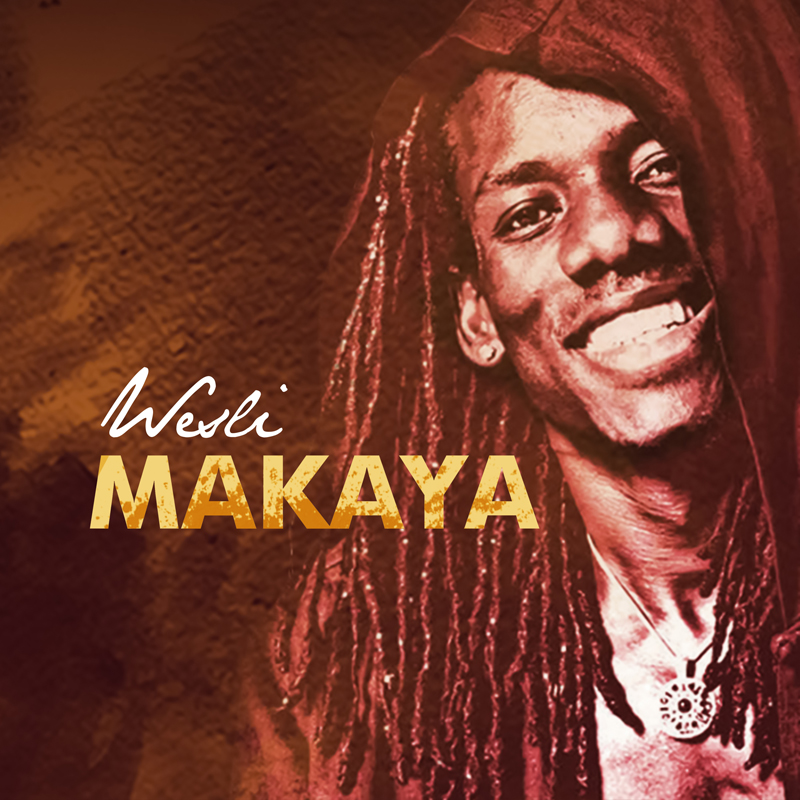
Wesli – Makaya (WUP, 2025)
Makaya, the expansive and awe-inspiring 24-track double album from Haitian-Canadian singer, guitarist, and folklorist Wesli stretches to nearly one hour and fifty minutes. Every track circles back to a single idea: Haiti’s musical memory walks, sings, and fights in the present tense.
The title reaches in several directions at once. Makaya is a mountain range in southern Haiti, a place tied to the first Maroons who carried resistance against French slavers into the hills, refusing to accept colonial rule. It also carries meaning in Kikongo, where “makaya” signifies “leaf,” a sacred symbol in ancestral Voodoo, linked to healing, purification, and renewal. Wesli leans into that symbolism, treating Makaya as both landscape and medicine: a high plateau for reflection and a bundle of leaves steeped into something strong enough to drink.
As a conceptual frame, the album looks back to Mother Africa and its many lineages: Igbo, Congo, Alada, Nago, Yoruba, Dahomé. Wesli presents these references as living presences, embedded in call-and-response refrains, inventive and irresistible drum patterns, and engaging melodic turns. Wesli carried out tremendous research in terms of rhythms. In addition to grooves from Haiti, Jamaica and the wider Caribbean, he added beats from West Africa, the African American diaspora and beyond. The record insists that African roots remain anchored in Haitian memory, even after centuries of colonization, prohibition, and erasure.
Wesli shared that songs on the album fall into various categories. The Electro Section introduces new soounds where Wesli fuses tradition with modernity. These include “Nago Electro”; “Maloya Yanvalou”; “Bontan Iyalélé”; and “Aloko.”
The Organic and Festive Section features traditional rhythms and the spirit of Haitian carnival: “Ayayay”; “Blackman Samba”; “Lanmou ak Konbit Lakay”; “Anba Tonel La”; and “Men Siyola.”
On the troubadour section Wesli explores the troubadour repertoire through the tracks “Chacha,” “Makonay” and “Lanmou Nou.” He modernizes the genre by adding banjo, accordion and manumba (Haitian kalimba), with elaborate jazz accents. Songs: “Chacha”; “Makonay”; and “Lanmou Nou.”
The album also explores the traditional Haitian rhythms: petro, rara, Dahomey, nago, congo and yanvalu. The instruments of African origin include bamboo, kata, segon, bula, manman tambu and the banjo. These are: “Makaya Rara”; “Rara Petro”; “Banda”; “Papa Loco”; “Aleman”; “Mèsi Bondyé”; and “Kouzin.”
The Afrobeat section uses this Nigerian style to carry strong messages. Wesli denounces social injustices and calls for collective awareness, staying true to the spirit of resistance that runs through Makaya. The songs include: “Soul Train”; “Rebel Union”; “Rèv Mwen”; and “Rezistans.”
Song Details:
The transfixing “Nago Elektro” was conceived and performed with Chadian Afrofuturist AfrotroniX, Wesli revisits a Nago rhythm and a traditional chant from Lakou Soukri in tribute to the Yorubas whose spiritual journeys shaped Haiti’s memory. It pulses like a late-night club track wired directly to the lakou.
“Maloya Yanvalou” is a joyful collaboration with Reunionese artist Nicolas M’tema. It combines the Haitian yanvalu rhythm with the maloya sounds of Reunion Island. This piece is a hymn to the gathering of tribes and to the assemblage of a nation’s crucial forces in the quest for freedom.
“Ayayay” is a hooky song propelled by a Kongo dance rhythm shifting between Dominican merengue, Caribbean zouk and Congolese soukous. This song celebrates affection, dance, and enjoyment. A sparkling composition where percussion energy meets Caribbean sexuality.
With its alluring grooves, “Blackman Samba” presents a symbolic piece, released January 1st, 2024, to honor Haiti’s 1804 independence. It manifests the pride and resilience of the Haitian people through a spirited mix of roots music, American funk, Jamaican reggae and dancehall, soul and Nigerian Afrobeat.
“Lanmou ak Konbit Lakay” celebrates the fondness and beauty of Haiti, a country that, despite impoverishment and adversity, sparkles through the richness of its culture and the strength of its people.
“Makaya Rara” is the album’s spirited focal point. Set to a Haitian petro rhythm, this track pays tribute to the Sambas, mythic figures of the Macaya Massif mountains who organized resistance and led the way to freedom.
Co-produced with AfrotroniX, “Bontan Iyalélé” draws from a Dahomean (Benin) rhythm of Lakou Souvnans and fuses Haitian yanvalu with contemporary African music.
“Aloko” was composed with AfrotroniX and Erol Josué. This piece is constructed from a yanvalu rhythm and invokes Papa Loco, a protective figure and spiritual guide in the struggle.
“Chacha” is a love song in pure troubadour tradition. It exalts the modesty and sweetness of Haitian life.
“Makonay” is a festive tribute to Madan Sara, an emblematic figure of Haitian womanhood whose resilience defines community life.
With “Lanmou Nou” Wesli offers a reggae-rooted song filled with sincerity and kindness.
“Anba Tonel La” is a reminder that tradition guides the future. This is another remarkable amalgam of Afro-rooted rhythms such as kongo, merengue, zouk and soukous.
With “Men Siyola” Wesli turns to the blues. Later, the music rises toward soukous. It addresses Haiti’s challenges, sending a message of unity.
“Rara Petro” is a song of rebellion against colonization, echoing music’s part in emancipation.
“Banda” was created with Sika Valmé. It honors intergenerational transmission of drumming traditions.
“Papa Loco” presents a traditional song carried by Yanvalu rhythm and modernized with subtle jazz and acoustic guitar colors.
“Aleman” reimagines a traditional Nago rhythm with blues influences and electric guitar.
On “Rèv Mwen” Wesli collaborates with BIC Tizon Dife. They reveal the dream of a Haitian child longing for a prosperous future.
“Mèsi Bondyé” is a traditional Nigerian Igbo song revisited with a funk tone. It intertwines Caribbean and African influences.
“Rezistans” presents a yanvalu-driven anthem of resilience. It honors the ancestors of Makaya.
“Afro B” is an Afrobeat song that addresses migration and its emotional cost.
With “Soul Train” Wesli celebrates heritage and Mother Africa, featuring Meryem Saci and ILam.
“Rebel Union” is a compelling Afrobeat track that represents unity among rebels preparing for revolution.
The last song, “Kouzin,” is a Jean-Claude Martineau composition depicting the harsh reality of Haitian laborers in sugarcane fields and bateyes.
The scope of Makaya brings plenty of rewards. Twenty-four tracks allow Wesli to survey an impressive range of Haitian styles, from rara to troubadour balladry, as well as other African and Afro-rooted traditions, from afrobeat-influenced protest songs to electronically enhanced dance numbers.
Makaya was released on November 18, chosen to honor the Battle of Vertières of November 18, 1803, a decisive victory led by Jean-Jacques Dessalines and François Capois that opened the door to Haiti’s declaration of independence on January 1, 1804.
His own words clarify the project’s emotional center: this album seeks to remind Haitians “who they are and where they are coming from.”
Musicians:
AfrotroniX on percussions, keyboards, music programming, bass; Wesli on lead vocals, guitar, banjo, koné, upright bass, music programming, percussions, keyboards; Ti Fane Stéphanie Séjour on backing vocals; Namouri Cissé on drum; David Mobio on keyboards; Pascal Laraque on keyboards and accordion; Nicolas M’Tima on music programming; Gaya Sanya Michel Elie on backing vocals; Emmanuella Michel on backing vocals; Noel Mpiaza Balu on drum; Watson Joseph on bass; Jean François Ouellet on baryton; André Desilets on sax; Rachel Therrien on trumpet; Etienne Lebel on trombone; Donald Dogbo on drum; Ronald Nazaire on manman; Karl Henry Bréseaux on manman; Joaquin Diaz on accordion; Kokou Damawou on trumpet; Mathieu Van Vliet on trombone; David Charbonneau on trumpet; Maxime Saint Pierre on trumpet; Moïse Matey Yawo on calabass and udu; Lasso Sanou on fulani flute; Kattam Laraki Cote on cajon; Marilyn Felix on backing vocals; Sylphir Charest on backing vocals; Sara Renelik on backing vocals; Michel Medrano Brindis on drum; Guy Khé on guitar; Martin Lizote on keyboards; Martine Labbe on trumpet; Nicolas Therrien on trombone; Sika Valmé on backing vocals.
Recording engineers and mixers: Planet Studio – Ghislain Brind’Amour, Marc-Antoine Joly, Jacob Veilleux, Adam Ben David, Jacob Cardinal Lacroix, Pascal Laraque, David François, AfrotroniX, Wesli; WUP Studio – Michael Mulholand, Wesli Louissaint; Studio Mixart – Olivier St-Pierre.
Buy Makaya.

Author: Angel Romero
Angel Romero y Ruiz has dedicated his life to musical exploration. His efforts included the creation of two online portals, worldmusiccentral.org and musicasdelmundo.com. In addition, Angel is the co-founder of the Transglobal World Music Chart, a panel of world music DJs and writers that celebrates global sounds. Furthermore, he delved into the record business, producing world music studio albums and compilations. His works have appeared on Alula Records, Ellipsis Arts, Indígena Records and Music of the World.