
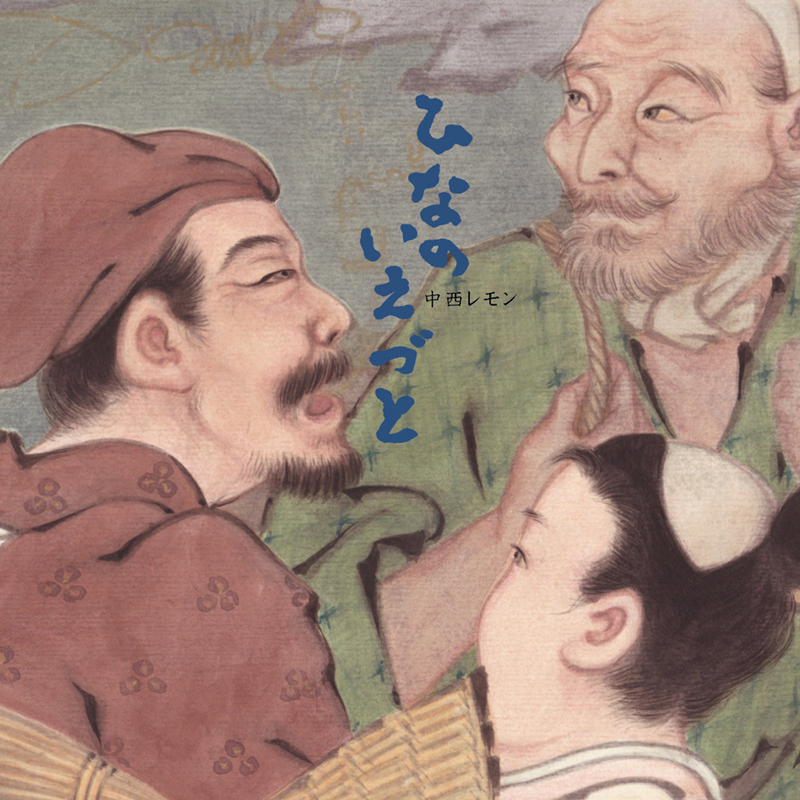
Remon Nakanishi 中西レモン – Hinano Iezuto ひなのいえづと (DOYASA! Records, 2022)
Remon Nakanishi ‘s Hinano Iezuto album’s title, drawn from an archaic Japanese phrase meaning “a gift from the countryside,” feels almost understated in describing the richness of this work. For listeners unfamiliar with Japan’s min’yō traditions or the ecstatic communal spirit of Bon Odori, Nakanishi’s album serves as both a revelation and a restoration. It transports, educates, and reanimates centuries-old traditions through a prism of bold sonic experimentation.
From the outset, Hinano Iezuto challenges the notion that traditional music must remain in stasis. While Nakanishi is celebrated as a master of Goshu Ondo—the robust and lyrical genre of Bon Odori songs from the Kansai region—this album takes a decisive step northward. Here, he turns his voice toward the songs of Tōhoku and Hokkaidō, regions often stereotyped as remote or peripheral in Japan’s cultural geography. However, far from being marginal, these northern traditions emerge as living, breathing forces, anchored by centuries of oral transmission, labor, and ritual.
Moreover, Hinano Iezuto pays homage to the legacy of the Goze, blind female minstrel singers from Echigo (modern-day Niigata Prefecture). These women, often shunned by mainstream society, cultivated a complex repertory of narrative songs, lullabies, and prayers. Their legacy, while historically fragile, finds new life in Nakanishi’s voice, which carries their weight with grace rather than gravity. One hears not only reverence but also a quiet urgency, as if the songs themselves were whispering, “Remember us, before we disappear.”
Crucially, this is no museum piece. Nakanishi’s vision is collaborative, open-hearted, and joyfully transnational. The arrangements burst with hybrid vigor: Cuban percussion collides with Japanese pentatonics; jazz horns converse with the steady pulse of Indian tabla; reggae grooves float beneath melodies once heard only in rice fields or temple yards. The musicianship is tight yet fun and elastic, allowing traditional forms to stretch without snapping. Each track is backed by an ensemble that includes drums, bass, guitars, marimba, trumpet, and more, a diverse mosaic that expands the boundaries of min’yō without distorting its core.
One cannot discuss the album without singling out Suzumeno Tears, the female vocal duo whose harmonies elevate the entire project. Their debut album Sparrow’s Arrows Fly So High (2024) may be a separate entity, yet their presence here acts as a crucial glue.
In short, Hinano Iezuto is a triumph of cultural stewardship and creative courage. Nakanishi repositions tradition within a wider global dialogue, one where Japanese folk idioms can dance with Caribbean rhythms or Indian beats and still retain their voice. For those of us searching for music that honors lineage while embracing change, this is an essential listen.
Remon Nakanishi on lead and backing vocals; Miyuki Sato on backing vocals; Masatsugu Hattori on drums, percussion & backing vocals; Masanori Hattori on acoustic bass; Yukari Iijima on percussion & backing vocals; Junzo Tateiwa on percussion; Naoyuki Seto on electric bass; Yuki Yoshida on erhu & backing vocals; Tomoko Kageyama on marimbas; Chiaki Miura on flügelhorn & trumpet; Atsushi Matsunaga on tuba; Hikaru Iwakawa quenas; Eri Umeno on keyboards; and Agatha on guitars, backing vocals.
Artwork & calligraphy by Remon Nakanishi.
Buy Hinano Iezuto.

Author: Madison Quinn
