Julian Belbachir – Babdoukkala (Julian Belbachir, 2022)
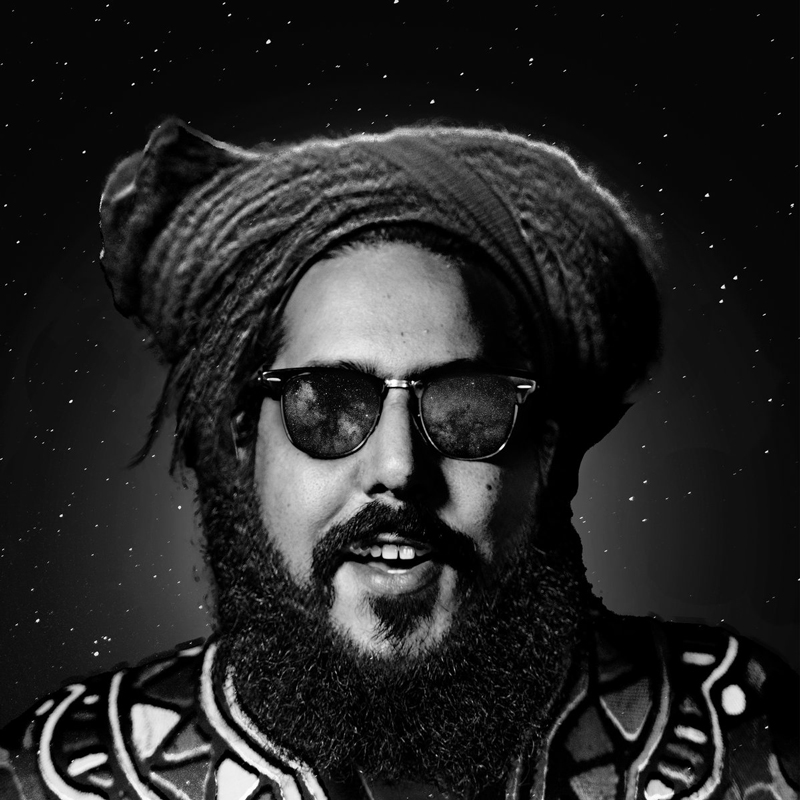
Julian Belbachir’s 2022 debut, Babdoukkala, draws from decades of immersion in West African percussion traditions, filtered through his Australian upbringing and Moroccan-Polish heritage.
Babdoukkala fuses this deep traditional foundation with a producer’s ear for contemporary sounds. Belbachir brilliantly combines elements of irresistible reggae, dub, jazz, drum & bass, and electronica with the trance-inducing pulse of Gnawa music, captivating, desert blues, West African influences and Indigenous Australian instrumentation.
The laid back desert blues “Mahaba,” meaning “welcome” or “love” in Moroccan Darija, opens the album with electric guitar, fiddle and traditional rhythms.
“Wassa” means “happy” in Manding, an ancient language spoken across Mali, Senegal, and Guinea. Co-written with longtime collaborator Lamine Sonko. This West African-flavored song with call and response vocals and excellent guitar and subtle synth lines promotes unity and peace across West Africa. The lyrics celebrating joy, togetherness, and spiritual connection.
Named after a historic gate in Essawira, Morocco, “Babdoukkala” is a superb instrumental track with Moroccan rhythms, funk grooves, and intricate West African electric guitar. It is inspired by sunset gatherings of musicians before traditional healing ceremonies.
“Home Lands” has a relaxed feel. The song reflects on displacement and the longing for one’s native country. It features Guinean singer Malin Sylla, who improvised powerful lyrics in Susu. The track features West African and dub influences. It emerged from a studio session with Alex Richardson. Notably, it addresses political instability, war, and spiritual resilience, invoking Tulaman, a symbolic bird of protection.
Written after a tour through Glastonbury and Morocco, “Musik Nomadz” fuses engaging reggae, Gnawa, and drum & bass. Inspired by life on the road, the song praises spiritual guides and traveling artists who find home through music rather than place.
The joyful and trancy “Soudani Manayo” reimagines a traditional Gnawa folk song rooted in North Africa’s history of slavery. Its message of unity, across class, race, and background, remains central. The refrain calls for solidarity: “rich and poor, we are together; all colors, we are together.”
Created during Australia’s COVID-19 lockdowns, “Babalarabi” began as a late-night jam between Julian Belbachir and Moroccan musician Imad Dably. The track evolved with fiery contributions from Los Angeles–based violinist QVLN, incorporating dub and electronic sounds around its North African foundation.
“Bani” reinterprets a traditional kora piece first introduced to Julian Belbachir in Guinea in 2010. Years later, in Sydney, it was reimagined with Malian guitarist Moussa Diakite. The track intertwines traditional west African melodies and jembe drumming with contemporary sounds, highlighting Diakite’s signature guitar work.
“Berber Silver” pays tribute to Saharan ancestry and Tuareg culture. Inspired by traditional jewelry known as “Berber silver,” the song brings together desert blues with harmonica and monophonic violin, evoking imagery of nomadic journeys across the Sahara.
Born in Sydney, Belbachir began playing African drums at age five. He later apprenticed under master musicians Sibo Bangoura and Mohammed Bangouraké. He deepened his studies in Guinea, Senegal, and Morocco with leading ensembles including Percussion de Guinée, Ballets Africains, and Boka Juniors, while also learning to craft traditional instruments such as jembe, kamele ngoni, guembri, and balafon.
As a collaborator, Belbachir has contributed to high-profile projects including A Tribe Called Red’s We Are the Halluci Nation (Juno Award, 2017), Leonard Sumner’s Standing in the Light (Juno-nominated), and releases by Empire of the Sun, Pnau, and Tash Sultana. He served as musical director for the 2018 Healing Our Spirit Worldwide Indigenous Conference and has shared stages with Stan Walker, Rocky Dawuni, and Stevie Salas.
Belbachir’s production credits reflect a commitment to cross-cultural exchange. Whether drumming with OKA in over 30 countries or co-producing records for artists across continents, his work underscores rhythm as a universal language, rooted, but not bound, by tradition.
The musicians featured on Babdoukkala represent various North and West African traditions, as well as other musical genres.
Malian-born guitarist and composer Moussa Diakite combines Wassulu traditions with Afrobeat, blues, and jazz. A former member of the Rail Band (1979–83), he later toured with Toumani Diabaté and Salif Keita. Now based in Sydney, he leads the group Wassado and has performed at WOMADelaide, Woodford, and other major festivals. His album Kanafo features collaborations with OKA’s Stu Fergie, The Cat Empire’s Ollie McGill, and Malian artists Bassidi Koné and Bassekou Kouyaté.
Gnawa musician and instrument maker Imad-Eddine Dably is from Essawira, Morocco. A student of master Abdellah Guinea, he promotes traditional instruments such as the gembri and karkabas through global performances and his Essawira workshop, Trans Music. He has toured with OKA and co-founded L’Instrumentique d’Afrique, a mobile museum supported by the Gnawa Festival and cultural institutions across Africa.
Senegalese-born Lamine Sonko is a Melbourne-based composer and artistic director, who fuses West African traditions with contemporary styles. A graduate of the Victorian College of the Arts, he fronts The African Intelligence and has performed with The Public Opinion Afro Orchestra. His credits include a Grammy-winning album and Afro Empire, winner of the 2018 Age Music Victoria Award. He leads arts education through The Knowing Project and large-scale productions such as One Africa and 13:12.
Ollie McGill is a pianist, composer, and founding member of The Cat Empire. Known for his improvisational flair, he’s also worked with Jackson Jackson, Spinifex Gum, and others. He composed the viral hit “Dumb Ways to Die” and leads the Ollie McGill Trio, performing original and New Orleans-inspired material.
Sydney-based producer and engineer Alex Richardson has worked with artists including Timomatic, Moussa Diakite, and OKA. After studying at SAE Byron Bay, he recorded with Grammy-winning producer Helik Hadar and co-founded The Monday Jam and a Five Dock studio. His custom console with Tree Audio is now manufactured globally.
QVLN (Q-Violin) is a genre-defying violinist and vocalist who draws from Afro-Latin, western classical, and soul traditions. A global performer and U.S. cultural ambassador, he has collaborated with Osunlade, Jose Marquez, and Tito Puente, and was praised by Prince for his live work with Yoruba Soul Orchestra.
Guinean percussionist and singer Fodé “Malin” Sylla mixes traditional rhythms with contemporary sounds. Now based in Australia, he has performed at major festivals and with artists including Mamady Keita and Moussa Diakite. His solo work reflects his roots in the Sylla musical lineage.
French guitarist and producer Hocine Benameur bridges classical, jazz, reggae, and North African traditions. He founded Saltimbank Studio H and has composed for artists including Sinik. After touring with Meta and Démocratoz, he now focuses on composing and performing with the acoustic oud.
Dominic Kirk is a Sydney-born percussionist, sound engineer, and Australia’s youngest Babalawo. A finalist at Cuba’s Fiesta del Tambor, he has performed with Pedrito Martinez, HERMITUDE, and Bill Summers. He leads Osa Ešu, an ensemble dedicated to Afro-Cuban ritual music.
Produced by Julian Belbachir and Alex Richardson
Mixed by Alex Richardson
Mastered by Darren Ziesing
Composed and Arranged by Julian Belbachir and Alex Richardson
Recorded at: Babdoukkala Studios, Giingan Studio, Megaphone Studio, The Nest Studios, Real Audio Studios
Musicians: Julian Belbachir – kamele ngoni, drums, jembe, dunduns, percussion, keys, trumpet, balafon, backing vocals; Alex Richardson – electric guitar, acoustic guitar, bass, keyboards, vocals; Hocine Renameur – oud; Rory Brown – bass; Malin Sylla – vocals (Home Lands); Lamine Sonko – vocals (Wassa); Moussa Diakite – lead guitar; Quetzal Guerrero (Qvin) – violin; Imad-eddine Dably – gumbre, percussion, zemmar, vocals (Musik Nomadz, Sudani Manayo, Babalarabi); Ollie McGill – keyboard; Louis Isaac – synthesizer (Wassa); Grey Read – harmonica (Babdoukkala and Berber Silver); Pablo Blitzer – saxophone; Mark Oats – violin (Wassa and Babdoukkala); and Simon Olsen – bass (Home Lands)
Design & Photography. Visual Concept and Design by Nicolaj Esteban. Logo Design by Julian Belbachir & Angelo Jones. Photography: Front cover by Angel Monsanto, Ben Belbachir, and Nicolaj Esteban. Middle page by Nicolaj Esteban.
Buy Babdoukkala.

Author: Angel Romero
Angel Romero y Ruiz has dedicated his life to musical exploration. His efforts included the creation of two online portals, worldmusiccentral.org and musicasdelmundo.com. In addition, Angel is the co-founder of the Transglobal World Music Chart, a panel of world music DJs and writers that celebrates global sounds. Furthermore, he delved into the record business, producing world music studio albums and compilations. His works have appeared on Alula Records, Ellipsis Arts, Indígena Records and Music of the World.