
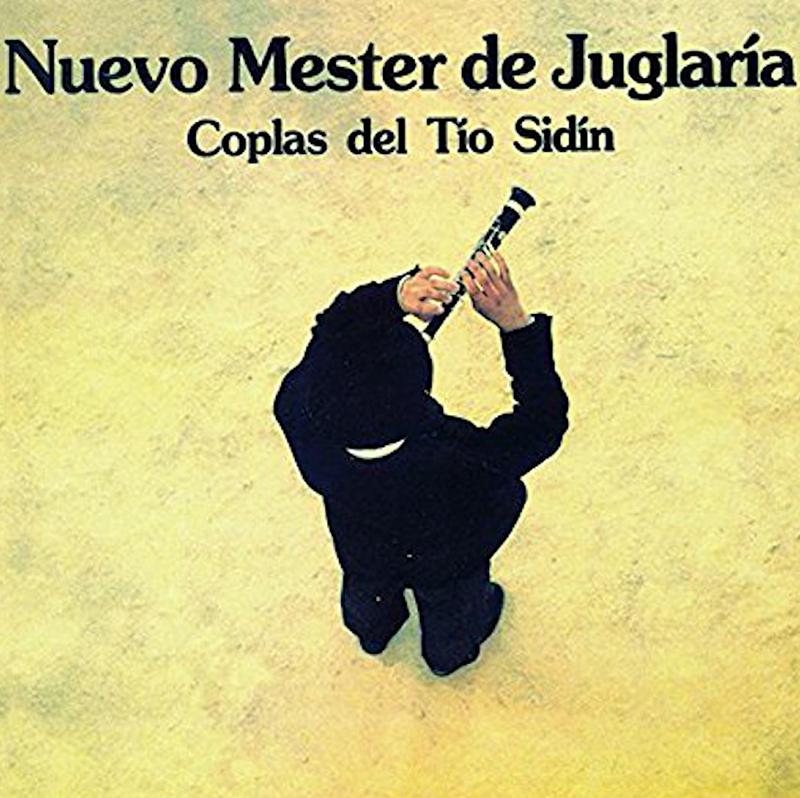
Nuevo Mester de Juglaría – Coplas del Tío Sidín (Philips, 1986)
Folk traditions meet precision on the album Coplas del Tío Sidín, a brisk, well-shaped set of Castilian dance forms and romances. This album was originally released on cassette and vinyl and was later reissued on CD. The set opens with “La jota del mester,” the Nuevo Mester de Juglaría’s calling card during their lice performances, where the dulzaina introduces each copla with style.
On “Jota del tío Juanete” the band presents an instrumental performance with the bandurrias trading lead lines with flauta de pico in quick, clean phrases.
“Ronda de las horas del reloj” features male voices spar in playful courtship while almirez and bandurria set an earthy pulse, a reminder that dance and street song remain this band’s natural habitat. The album also features border ballads, like “Un rey tenía un hijo,” and the staple “Delgadina,” mixing fascinating lyrics with folk dance energy.
The set combines romances and jotas. They alternate to balance pace and plot, so the record reads like a village day: procession, flirtation, story, and revel.
Closer “Yo tenía un pajarito” is an airy, festive round, light on its feet and tailor-made for encores.
Nuevo Mester de Juglaría is one of the oldest bands in the Castilian folk scene. Formed by Segovian college students living in Madrid, they rose to fame with their renovated form of Castilian folk music. By 1986, Nuevo Mester had learned from fieldwork and sources like Agapito Marazuela, and creatively arranged their songs and tunes for vocals, guitars, lutes, bandurrias, dulzaina, flutes, and sturdy hand percussion. The landmark cantata Los Comuneros (1976) proved their large-form ambition, while Coplas del Tío Sidín returned to compact forms.
The original band included Milagros Olmos (vocals and percussion), Mirian Nieto (vocals and lute), Fernando Ortiz (vocals, flute, and guitar), Rafael San Frutos (vocals and guitar) and Luis Martín (vocals and bandurria). Milagros Olmos passed away in 2025.

Author: Angel Romero
Angel Romero y Ruiz has dedicated his life to musical exploration. His efforts included the creation of two online portals, worldmusiccentral.org and musicasdelmundo.com. In addition, Angel is the co-founder of the Transglobal World Music Chart, a panel of world music DJs and writers that celebrates global sounds. Furthermore, he delved into the record business, producing world music studio albums and compilations. His works have appeared on Alula Records, Ellipsis Arts, Indígena Records and Music of the World.