
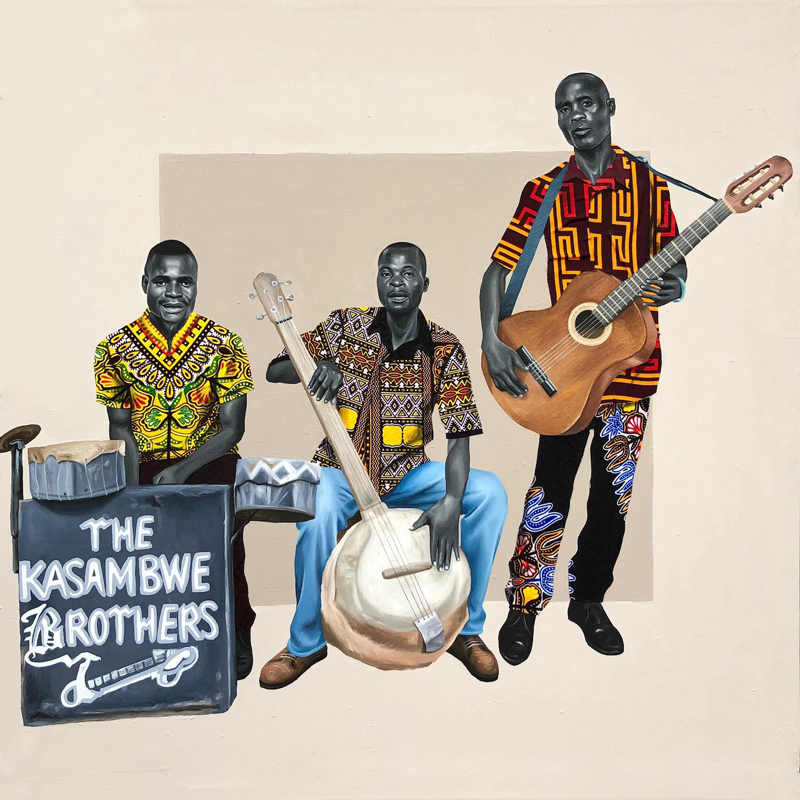
The Kasambwe Brothers – The Kasambwe Brothers (MASS MoCA Records, 2025)
A kick drum stitched from bottle tops, a babatone that functions like a well-worn engine, and warm voices that rise together. This is the sound of Malawi’s talented The Kasambwe Brothers, a band that introduces itself with the confidence of veteran musicians. The group’s long history, from the streets of Ndirande, just outside Blantyre, to a residency and recording sprint at Massachusetts Museum of Contemporary Art (MASS MoCA) feeds an album that is joyful, engaging and deeply rooted in Malawian tradition.
A multi-generational unit first assembled in 1987, the Brothers are now led by younger players who learned the craft from family. Their invitation from the Massachusetts Museum of Contemporary Art, in partnership with Hen House Studios, placed them in Studio 9 with producer Harlan Steinberger. The window was tight, although the goal was clear: capture what Ndirande already knew. The decision paid off. Steinberger kept the microphones near the breath and the drumheads to capture the essence of this trio.
Instrumentally, the record makes a case for expertise built under constraint. Joseph Msofi’s guitar sketches inventive melodies that the voices color with charm. Fatsani Kennedy’s homemade kit, invented from wood, sticks, bottle caps, and old pots, does not chase a pristine sound. Instead, it chases feel, and gets there. Konzani Chikwata’s babatone, a floor-seated, large frame-ridden bass instrument seldom heard even in Malawi, supports the ensemble with a low, rubbery thrum. When the skins for those instruments proved impossible to import, the team rebuilt them on site. That detail tells you everything about the spirit here: make the tool, then make the song. This is genuine world music carried by street-level ingenuity and family harmony.
“Mtima Wanga” and “Getu” open the album like twin letters, affectionate, rhythm-forward, sung in Chichewa, and paced for dancing as much as listening. “Ahedi” pivots toward testimonial, recounting a student who confronts predatory teachers and risks her future to do it.
“Kungade” turns courtship into a night walk, aware that public transportation in Malawi shuts down after dark and that love, therefore, often requires miles of footpaths.
Dances associated with regions of Malawi, some, like Vimbuza, bearing UNESCO recognition, surface as engines that change the gait of each track. The band treats movement as message, insisting that understanding can begin with the body. Audiences at MASS MoCA reportedly answered in kind, children, and adults folding into the beat without instruction. The album preserves that energy more often than not.
The Brothers earned local devotion playing markets and bottle stores, appearing on radio more than on streaming platforms, shaping an audience song by song. Their residency introduced collaborators from Massachusetts, a first for the band, and those guests slip in politely, brightening the picture without crowding it. The sessions also reintroduced the idea of the album to a group that, despite a long history, had never captured its current incarnation in full.

Author: Angel Romero
Angel Romero y Ruiz has dedicated his life to musical exploration. His efforts included the creation of two online portals, worldmusiccentral.org and musicasdelmundo.com. In addition, Angel is the co-founder of the Transglobal World Music Chart, a panel of world music DJs and writers that celebrates global sounds. Furthermore, he delved into the record business, producing world music studio albums and compilations. His works have appeared on Alula Records, Ellipsis Arts, Indígena Records and Music of the World.