(headline image: Algair Jaw Harp)
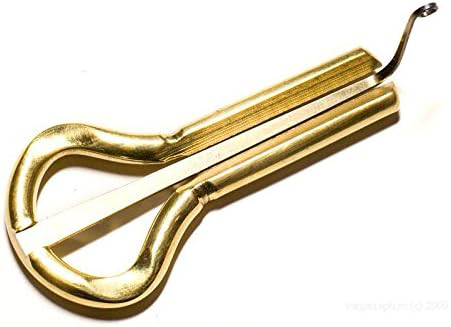
Few musical instruments are as small and unassuming yet as globally far-reaching as the jaw harp. Also known as the “Jew’s harp” or mouth harp, this humble lamellophone consists of a flexible tongue or reed, traditionally of metal or bamboo, attached to a frame. It is held against the performer’s teeth or lips and plucked with a finger. As a result, it produces a distinctive twanging drone that resonates in the player’s mouth.
Despite its simplicity, the jaw harp has an ancient pedigree and a remarkably wide geographic spread, sounding its vibrating tones in cultures from the high Arctic to the tropics. Indeed, ethnomusicologists note that jaw harps rank among the oldest musical implements of humankind, with archaeological finds suggesting an origin dating back thousands of years.
Ancient Origins Across Cultures

Historical evidence for the jaw harp’s antiquity emerges across continents. In recent decades, archaeologists in China uncovered thin, curved bone objects at a Neolithic site in Shaanxi province, identified by music specialists as mouth harps, dating to roughly 2000 BCE. One archaeologist famously proclaimed Shimao (the site of the find) as the “birthplace of the mouth reed,” noting that from these early Asian origins the instrument likely spread along ancient trade routes to countless cultures. By the late Middle Ages the jaw harp had firmly taken root in Europe: written accounts from 14th–15th century Europe mention the instrument, and craft guilds dedicated to jaw harp making existed in places like Molln, Austria by the early modern era.
Supporting this east-to-west spread theory is the fact that idioglot mouth harps (carved from a single piece of bamboo or wood) were long prevalent across Asia, whereas Europe’s harps were heteroglot (a separate metal tongue mounted on a frame), a design evolution that may have been imported and refined locally.
Once the instrument gained a foothold in Europe, it did not remain there in isolation. European colonization later carried the jaw harp overseas: colonial records and ethnographers note that by the 18th–19th centuries, traders were circulating jaw harps to the Americas, Africa, and the Pacific Region, where the compact instrument was inexpensive and easily portable. In some cases the introduced metal jaw harps supplanted indigenous bamboo versions; in other cases they were adopted into local music alongside native instruments. By the modern era, the jaw harp could be found (to varying degrees) on every populated continent.
From Bamboo to Iron: Materials and Craftsmanship
One reason for the jaw harp’s global ubiquity is its straightforward construction, employing materials readily at hand. Around the world, makers have crafted jaw harps from a diverse range of materials, from plant stalks to metal alloys.
In many Austronesian and Asian traditions, bamboo or hardwood was the preferred medium: for example, the Balinese genggong is cut from a sugar-palm leaf stem, and the Philippines’ traditional kubing is whittled from bamboo slats. These idioglot harps feature a tongue that is one with the frame, sliced out from the material itself. Such all-wood or all-bamboo harps produce a softer, buzzing sound and often have delicate, flat bodies.
By contrast, metal came to dominate jaw harp construction in Europe and Central Asia. Blacksmiths across Europe commonly forged harps from iron or steel, and in India craftsmen cast or wrought them from brass and alloys (as with the South Indian morsing). The metallurgical approach yields a robust, piercing twang and greater volume, well-suited to outdoor performance or ensemble playing.
Metal harps typically use a heteroglot design: a forged iron frame shaped like a lyre or horseshoe, with a separate tempered steel tongue fixed at one end of the frame. Many fine European examples, such as the classic Austrian “maultrommel,” consist of a bowed metal frame and a spring-steel reed expertly tuned to a specific pitch.
Some indigenous Siberian groups historically carved jaw harps from reindeer horn or wood, sometimes mythically styling them after a lightning-split tree (considered sacred in Yakut belief).

The instrument’s buzzing, hypnotic drone was believed to aid in inducing trance states and communicating with the spirit world. Even today, Yakutians celebrate an annual “Khomus Day” every November to honor their national instrument, and the region hosts the world’s only Khomus Museum. In these shamanic traditions, jaw harps are vehicles of otherworldly connection. Yakut shamans once used the khomus to exorcise evil spirits and heal the sick, often decorating their instruments with sacred carvings to enhance their spiritual power.
In Java and Bali, the bamboo genggong jaw harp traditionally accompanies dances and even gamelan ensembles. Ethnomusicological studies have noted that in Indonesia and the Philippines, jaw harps often serve as instruments of courtship: young people would exchange musical phrases on mouth harps as a form of flirtatious dialogue or love signaling. The instrument’s gentle voice and close-to-the-body intimacy made it an apt vehicle for private communication. Performers also develop intricate techniques, from rapid tonguing effects to breathing patterns, that allow the jaw harp to “speak” in ways resembling human speech or animal calls, effectively turning it into a storytelling aid. For example, an epic tale or folk narrative might be accentuated by a jaw harp mimicking the trotting of a horse or the buzzing of a mythical insect.
Asia is also home to great diversity in jaw harp design. In addition to the prevalent single-tongue instruments, there are multi-tongued jaw harps, especially in East and Central Asia. The Chinese kouxian used by certain ethnic minorities consists of a set of multiple thin bronze blades tuned to different pitches, allowing a form of polyphony or the playing of scalar melodies. Likewise, the Yakut and Kyrgyz people have developed jaw harps with two, three, or even four parallel reeds within one frame, which enriches the harmonic content and creates a pulsing chordal effect.
Europe: From Folk Pastime to Concert Halls
In Europe, the jaw harp found a comfortable home in the folk music sphere. By the early modern period, it was widely played among rural communities from the British Isles to the Balkans. European jaw harps were almost exclusively the metal heteroglot type and often mass-produced by local blacksmiths.
Owing to its portability and relatively loud, droning sound, the jaw harp became a staple for dances and village gatherings, a kind of rustic rhythmic accompaniment that a single person could carry in a pocket.
Neverheless, the jaw harp was not purely confined to peasant circles in Europe. In a surprising twist, the instrument enjoyed moments of high-culture recognition, particularly in the 18th century. The most famous example is Johann Georg Albrechtsberger, an Austrian composer (and one of Beethoven’s teachers) who in the 1760s–1770s wrote a set of concerti featuring the jaw harp as a solo instrument. These jaw harp concertos, complete with string orchestra accompaniment, exploited the instrument’s capacity to play melodies via overtone selection, and they stunned European audiences by elevating a simple mouth harp to virtuoso status.
Jaw harps became popular in Appalachian folk music by the 19th century. Indeed, American catalogs sold “Ozark harps” for a few cents, and the instrument was commonly found in Civil War encampments as a soldier’s diversion. By the early 20th century, however, the jaw harp in Europe and America had waned in popularity, largely supplanted by the mouth harmonica (which offered the ability to play fully chromatic melodies and chords).
A Resurgence and a Living Tradition
In recent decades, the jaw harp has enjoyed a remarkable revival and a revaluation of its cultural importance. Beginning in the folk revivals of the 1960s and 1970s, musicians and ethnographers in Europe and Asia sought to reintroduce the jaw harp into contemporary music and preserve its traditional playing styles. In Austria, for example, dedicated players revived the old Alpine alternating technique of switching between two or three differently tuned harps to achieve a wider melodic range. This effort helped Austrian maultrommel playing gain recognition by UNESCO, which in 2012 inscribed it on the national Intangible Cultural Heritage list.
Similarly, the khomus of Yakutia, Russia, has become an emblem of national pride, with master artisans forging high-quality jaw harps that are exported worldwide and festivals that draw international attendees. Global networks of jaw harp enthusiasts now exist, exemplified by the International Jew’s Harp Society and regular world congresses where players from dozens of countries share techniques, from Norwegian munnharpe tunes to Japanese Ainu mukkuri songs.
Meanwhile, contemporary musicians have rediscovered the jaw harp’s unique sound qualities. Its primal buzz and overtone melodies have been incorporated into genres ranging from folk-rock and world fusion to experimental electronic music.
Some of the names of the jaw harps of the world include: arpa de boca (Spain), birimbao (Spain), brummeisen (Germany), đan moi (Vietnam), genggong (Indonesia), guimbarda (Spain), guimbarde (France), jigatch ooz komuz (Kyrgyz), khomus (Siberia, Russia), kouxian (China), marranzanu (Italy), maultrommel (Austria), morchang (India), morsing (India), mundharmonika (Germany), munnharpe (Norway), murchang (India), murchunga (India), scacciapensieri (Italy), spassapensieri (Italy), temir komuz (Kyrgyz), tromp (UK), trompa (Spain), trompa de boca (Spain), trompa gallega (Spain), trompa de París (Spain), trompe de Bearn (France), trompe de laquais (France), trump (North America, UK), and vargan (Siberia).
Jaw Harp Books
- How To Play Jews Harp: A Beginner’s Guide To Mastering The Mouth Harp With Essential Techniques, Melodies And Tips For Beginners
- Jaw Harp Playing: Breath Control, Rhythmic Patterns, Resonance Manipulation, Traditional Styles, Sound Production, Mouth H…
- How To Play Morchang: A Step-By-Step Guide To Mastering Morchang Techniques, Indian Folk Rhythms, And Jaw Harp Expression For Beginners And Beyond
Sources:
- Vetter, R. Jew’s Harp – Grinnell College Musical Instrument Collection, omeka-s.grinnell.edu
- Österreichische UNESCO-Kommission – Jew’s harp playing in Austria (Intangible Cultural Heritage entry, 2012) unesco.atunesco.at
- Archaic Roots – The Jaw Harp (Jew’s harp or mouth harp), archaicroots.comarchaicroots.com
- National Geographic – Zhouyong Sun interview on Shimao, “Mysterious carvings… uncovered in ancient city in China,” nationalgeographic.com
- Healing Sounds blog – “The role of the Jew’s harp in traditional music worldwide”, healing-sounds.com
- Arctic Russia – “Cheeks, reed — and the sounds of space” (Khomus Day article, 2022), arctic-russia.ru
- Wikipedia – “Jew’s Harp” (various sections on history, usage), en.wikipedia.org
- Fundacion Joaquín Díaz. funjdiaz.net/instrumentos-museos-ficha.php?id=108

Author: Angel Romero
Angel Romero y Ruiz has dedicated his life to musical exploration. His efforts included the creation of two online portals, worldmusiccentral.org and musicasdelmundo.com. In addition, Angel is the co-founder of the Transglobal World Music Chart, a panel of world music DJs and writers that celebrates global sounds. Furthermore, he delved into the record business, producing world music studio albums and compilations. His works have appeared on Alula Records, Ellipsis Arts, Indígena Records and Music of the World.