
British writer and musician John Phillpott examines the work of ‘the collectors’ who helped to ensure the survival of a rural tradition…
The main reason why the varied folk music of America has enjoyed a healthy transition from front porch to concert hall and beyond is arguably down to its enduring and universal appeal.
Standing here on the other side of the Pond and looking across the ocean at the still-vast rural hinterlands of the United States, it seems to me that quite a few Americans enthusiastically remain in touch with their roots.
Mind you, I live in a suburban city street in the English Midlands surrounded by bricks and mortar, so it doesn’t take much to appear alluringly exotic.
So, for solace and satisfaction of the soul, I regularly take a fantasy flight via YouTube airways to the Appalachian Mountains or the Mississippi lowlands where I can drink my fill of ‘down home’ music.
Down home. In Britain, we have no comparable term, neither is there an English equivalent of porch-picking and fiddling, nor Saturday night fish fry. Yes, we do have cremated barbecue pork chops during the summer when it’s not actually raining, but it isn’t the same by a long shot.
Having said that, there might well often be a pale imitation at our house, and in the garden come the warmer months. But the neighbours stay well indoors and keep away. They ARE British, after all, dammit.
Mind you, at least I enjoy it. But this sure ain’t bayou country with a crawdad gumbo simmering on the stove. Ah, sorry about that. I’ll try not to let such misappropriation happen again.
Here in England, the heart of our native music has been on life support for decades, kept alive courtesy of folk clubs and pub sessions. This is, however, certainly not the case with the other regions that make up the archipelago which form the British Isles, notably Scotland and Ireland.

That the English have any living, original music at all is almost certainly down to the ‘collectors’, a group of dedicated enthusiasts who, at the turn of the 19th and beginning of the 20th century, realised that the rural tradition was being lost because of country people’s mass exodus from the land to towns and cities.
This flight from the fields to the factories had continued apace as the 19th century wore on, a process that had started with the onset of the Industrial Revolution in the 18th century, and which had accelerated after the end of the Napoleonic Wars in 1815.
The conflict had been followed by an agricultural depression, one that seriously impacted the incomes of those whose lives depended on working the land. And as former villagers found themselves living in overcrowded tenements, toiling for long hours that owed nothing to the natural rhythm of the seasons, the music of their ancestors started to be forgotten.
For the fact that so much music was snatched from obscurity or extinction, we must thank this small group of mainly middle-class enthusiasts, whose messianic efforts were conducted with a tireless energy.
Their names should be writ large. Sabine Baring-Gould, John and Lucy Broadwood, Frank Kidson and – above all – Cecil Sharp. A younger group of collectors included the composers Ralph Vaughan Williams, Percy Grainger, Herbert Hughes and George Butterworth.
For previous generations, the music of the working classes had been shut off from their ‘betters’ by the rigid barriers of the British class system, the squires, parsons and landowners being generally unaware of the wealth of song available to their workers.
Many of these songs were preoccupied with the rural way of life. There was Harry Cox’s version of The Spotted Cow, or Fred Jordan’s The Farmer’s Boy, which incidentally I first heard as a youngster working on a farm in my native English county of Warwickshire.
Sung by an old farmer who had clearly noticed the tenderness of my years, it seemed to be a fingertips grasp of a lost past that had long vanished from a rural England about to be engulfed by motorways and the sprawling out-of-town industrial estates of the 1960s.
Today, The Farmer’s Boy is in excellent health. Possibly the exception that defies a depressing rule, the tune still enjoys no small degree of popularity, various versions being accessible on the internet.

Harry Cox had been ‘discovered’ by E. J. Moeran in 1921. Cox was an East Anglian farm labourer with a remarkable hoard of songs and a dry, understated style of singing.
In the following year, some of his songs began to appear in the English Folk Dance and Song Society Journal and ten years later, the society issued two of his songs on their first gramophone record.
Not all songs dealt with rural issues. Both Cox and Jordan had extensive repertoires, the former performing songs such as The Rigs of London Town, the latter reprising the almost certain pagan past of the mysterious John Barleycorn.
Meanwhile, Walter Pardon contributed songs such as The Deserter, The Dandy Man and The Maid of Australia.
Other singers also delved deep into former times when the arrival of gypsies in a rural community might have a dramatic effect. Jeannie Robertson’s The Gypsy Laddie tells a familiar tale of the rich man’s wife eloping with the handsome travelling man.
This is a theme that persists in a wealth of songs, many of which crossed the Atlantic in the 18th century and found new voice in the mountains of the American eastern seaboard, eventually venturing further into fledgling states such as Kentucky and Tennessee.
Elsewhere, life at sea was chronicled by veteran ‘shantyman’ Stan Hugill with his Shoals of Herring and Greenland Whale Fisheries.
It took inquiring minds to painstakingly collect these songs. Hundreds were collected and printed, usually with piano accompaniment, and frequently adapted away from the modes in which they were originally sung.
To the Victorians, these modes seemed wrong, finding it hard to accept that untutored farm labourers could be capable of singing intuitively. So many of the songs and dances were basically sanitised, some of the tunes being ‘cleaned up’ and reprocessed as Protestant hymns suitable for more delicate ears.
A good example of this process is the transformation of the tune setting to The Blacksmith – a folk song full of erotic metaphor – into the evergreen To Be a Pilgrim, a hymn that remains a firm favourite with the English High Church as well as the dissenting Methodist and Baptist churches.
Nevertheless, collector Sabine Baring-Gould tended to keep the original words, unlike others who imposed a middle-class and antiquarian view of what the public should be allowed to hear.
But if the Industrial Revolution had done much to shatter rural life in a variety of ways, with the old traditions falling into disuse, then a much greater cataclysm was about to occur… The First World War.
Nothing would ever be the same again when the conflict ended in 1918, for the growing popularity of Music Hall in the late Victorian period had accelerated during the war years as songwriters sought to create tunes that reflected the moods of the period.
Midlander Jack Judge’s immortal creation Tipperary was just one out of hundreds of the era’s equivalents of ‘pop music’ that had swept away the songs of a past age that were rapidly fading from public memory.
This cross-pollination would create attitudes that linger to this day. The arbitrary exclusion of that which is not considered ‘folk’ is still echoed in some British traditional clubs in much the same way that jazz endlessly provokes strong feelings and furious argument between traditionalists and modernists.
The composer Percy Grainger was, however, less dogmatic. Keenly alive to the vitality of folk song, Grainger, alone among the collectors, saw that performance was a potent factor in the continued survival of traditional music, and so he tended to be less ‘hard line’ in its interpretation.
Grainger was also an advocate of using the then new recording techniques, preferring these methods to capture the essence of a song or tune, rather than the much more laborious pen, pencil and paper collecting tools favoured by most of his contemporaries.
The great work of Cecil Sharp requires very little introduction here, and readers of my previous articles for World Music Central will know that he also travelled to the southern states of America where, deep in the mountains, he discovered a rich seam of music that owed its origins to the British Isles.
Sharp died in 1924, and from then until the 1950s, little collecting work was done. But in the years immediately following the end of the Second World War, the torch dropped by the early trailblazers would be picked up by a new generation, keen to discover the songs of their ancestors.
In time, this would become known as The Folk Revival. For the music had not died… it had merely been sleeping.
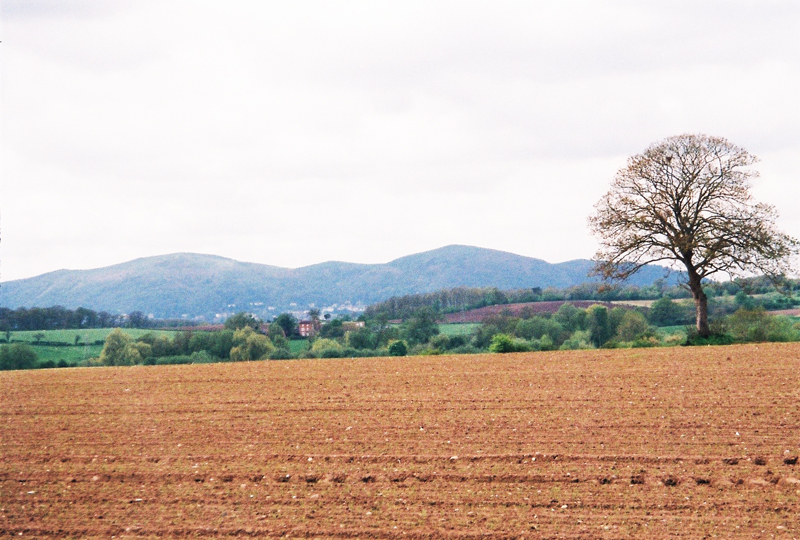
(headline image: Malv Hills)

Author: John Philpott
Author and journalist John Phillpott has written for many newspapers and magazines during a career that spans more than 50 years. His latest book Go and Make the Tea, Boy! is a memoir of his days as a young reporter.