
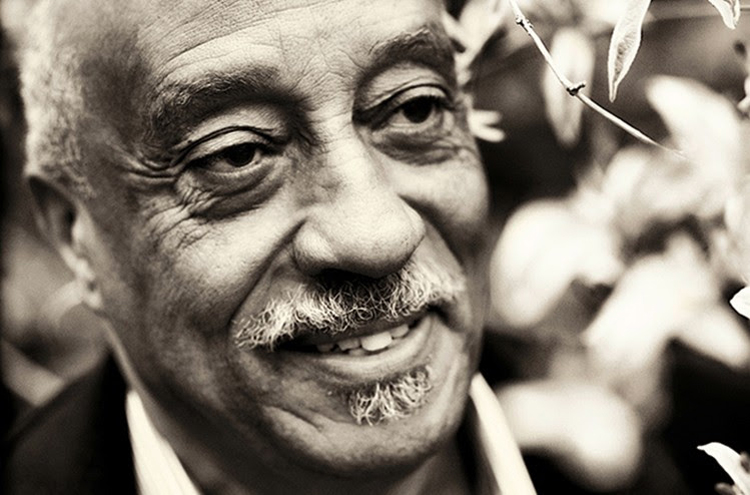
Mulatu Astatke (b. 19 December 1943) is an Ethiopian musician, composer, and arranger widely regarded as the originator of Ethio-jazz, a genre that fuses Ethiopian traditional music with elements of American jazz, Latin rhythms, and African popular styles.
Born in Jimma, southwestern Ethiopia, Astatke received his early education in the United Kingdom, where his family had sent him to study engineering. He attended Lindisfarne College in Wales before pursuing formal musical training at Trinity College of Music in London. While in London, he collaborated with jazz vocalist and percussionist Frank Holder and developed a growing interest in jazz and Latin music.
In the 1960s, Astatke relocated to the United States to study vibraphone and percussion at the Berklee College of Music in Boston, becoming the first African student at the institution. He later moved to New York City, where he recorded his debut albums, Afro-Latin Soul Volumes 1 and 2 (1966). These recordings showcased his vibraphone work, supported by piano and conga-driven Latin rhythms, and were predominantly instrumental aside from one Spanish-language track, “I Faram Gami I Faram.”
Astatke introduced the vibraphone and conga drums into Ethiopian popular music during the early 1970s, integrating them alongside keyboards, organ, and other percussion instruments. His landmark recording Mulatu of Ethiopia (1972) was produced in New York, but most of his work from this era was released through Amha Records in Addis Ababa. Albums such as Yekatit Ethio Jazz (1974) blended traditional Ethiopian modes with American jazz, funk, and soul. He also contributed to Ethiopian Modern Instrumentals Hits and collaborated with leading Ethiopian artists including Mahmoud Ahmed. In 1973, he performed as a guest with Duke Ellington’s orchestra during its Ethiopian tour.
Following the 1975 closure of Amha Records under the Derg regime, Astatke continued performing in Ethiopia, notably appearing on Hailu Mergia and the Walias Band’s Tche Belew (1977). Many of his 1970s recordings fell into obscurity until the 1990s, when collectors and international audiences began rediscovering them. In 1998, the French label Buda Musique reissued his work in Éthiopiques Volume 4: Ethio Jazz & Musique Instrumentale, 1969–1974, significantly expanding his global recognition.
Astatke’s compositions have influenced musicians across Africa and beyond. His music has appeared in Jim Jarmusch’s film Broken Flowers (2005) and has been sampled by artists such as Nas, Damian Marley, Kanye West, Madlib, and Cut Chemist. His instrumentals have also been featured on National Public Radio programs, including This American Life.
In the 2000s, Astatke began new international collaborations. He performed and toured extensively with the Either/Orchestra, recorded Inspiration Information Vol. 3 (2009) with The Heliocentrics, and worked on modernizing traditional Ethiopian instruments during his fellowship at Harvard University’s Radcliffe Institute. He also served as an Abramowitz Artist-in-Residence at the Massachusetts Institute of Technology, where he advised on the development of a modern krar.

His later projects included a 2009 Ethiopian Airlines-exclusive compilation and multiple albums with the Australian ensemble Black Jesus Experience, such as Cradle of Humanity (2016) and To Know Without Knowing (2020). These works extended his Ethio-jazz approach through cross-cultural arrangements recorded between Addis Ababa and Melbourne.
In 2024, Astatke collaborated with Tel Aviv’s Hoodna Orchestra on Tension (Batov Records), combining his vibraphone artistry with their brass-heavy Afro-funk sound. The following year, he announced Mulatu Plays Mulatu (Strut Records), his first major studio release in over a decade. This album presented new arrangements of classic compositions such as “Yekermo Sew,” “Netsanet,” and “Kulun,” recorded in London and Addis Ababa with his long-standing UK band and musicians from his Jazz Village club. It features traditional Ethiopian instruments including the krar, masenqo, washint, kebero, and begena. The album exemplifies his vision of Ethio-jazz as a dialogue between Ethiopian heritage and global jazz traditions.
Astatke has described Ethio-jazz as a unifying art form, honoring both contemporary creativity and the “unsung heroes” of Ethiopia’s musical past. His career, spanning over six decades, continues to shape the international perception of Ethiopian music and its integration with modern jazz idioms.
Africa Oyé’s Artistic Director, Paul Duhaney, said “Mulatu Astatke is one of those artists who so many people will have heard without realizing it. Whether it’s on a Nas & Damian Marley track or on dozens of dance remixes, his influence can’t be understated. A few years ago I was at an expo in Uganda and I saw a DJ collective called Saturi Safari play a brilliant house music mix of one of his songs; he’s just hugely respected the world over.”
In 2025, Mulatu announced his retirement from touring.
Discography:
Maskaram Setaba (Addis Ababa, 1966)
Afro-Latin Soul, Volume (Worthy, 1966)
Afro-Latin Soul, Volume 2 (Worthy, 1966)
Mulatu of Ethiopia (Worthy, 1972)
Yekatit Ethio-Jazz (Amha, 1974)
Tche Belew with Hailu Mergia & The Walias Band (Kaifa, 1977)
Plays Ethio Jazz (Poljazz, 1989)
Assiyo Bellema (1994)
Éthiopiques, Vol. 4: Ethio Jazz & Musique Instrumentale, 1969–1974 (Buda Musique, 1998)
E così sia and “Ethiopia,” with Baustelle (2008)
Inspiration Information, with The Heliocentrics (Strut, 2009)
Mulatu Steps Ahead, with the Either/Orchestra (Strut, 2010)
Sketches of Ethiopia (Jazz Village, 2013)
Cradle of Humanity, with Black Jesus Experience (BJX, 2016)
To Know Without Knowing, with Black Jesus Experience (BJX, 2020)
Tension, with Hoodna Orchestra (Batov Records, 2024)
Mulatu Plays Mulatu (Strut, 2025)

Author: Angel Romero
Angel Romero y Ruiz has dedicated his life to musical exploration. His efforts included the creation of two online portals, worldmusiccentral.org and musicasdelmundo.com. In addition, Angel is the co-founder of the Transglobal World Music Chart, a panel of world music DJs and writers that celebrates global sounds. Furthermore, he delved into the record business, producing world music studio albums and compilations. His works have appeared on Alula Records, Ellipsis Arts, Indígena Records and Music of the World.