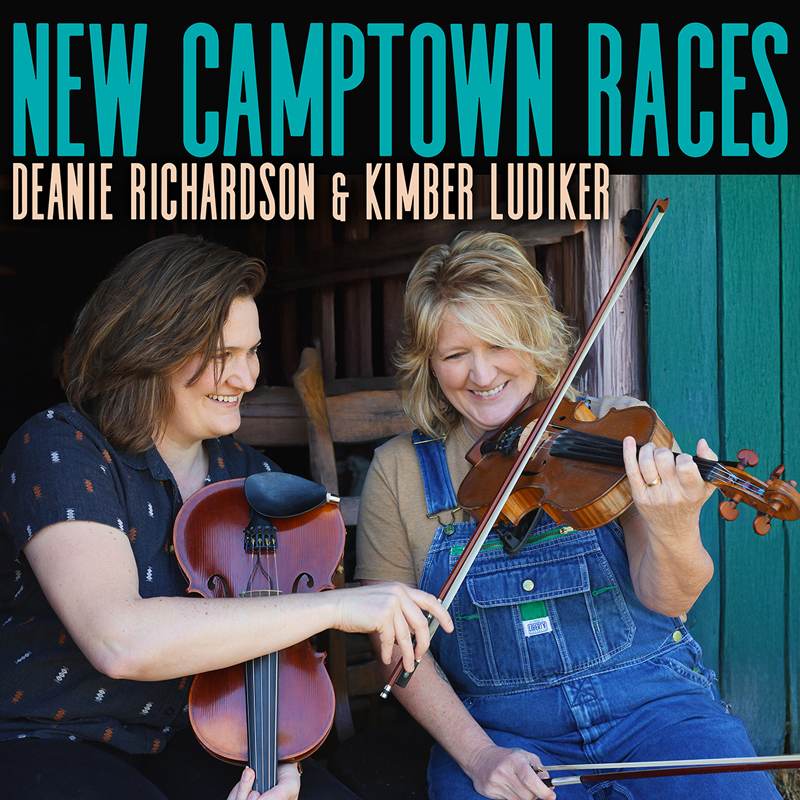
Deanie Richardson and Kimber Ludiker revisit Frank Wakefield’s mid-century instrumental “New Camptown Races” with precision, energy, and a shared commitment to expanding the expressive potential of twin fiddling.
Composed in the 1950s by the famously idiosyncratic mandolinist Frank Wakefield, “New Camptown Races” broke new ground in bluegrass harmony. Richardson and Ludiker approach the piece with structural clarity and rhythmic drive, applying their meticulous twin fiddle technique to a melody originally written for mandolin. Richardson, a two-time IBMA Fiddle Player of the Year, leads with a sequence of stylistically varied phrases; Ludiker shadows her closely, matching tone, articulation, and bowing with remarkable control.
Additional momentum comes from a sharp rhythm section: Kristin Scott Benson (banjo), Tristan Scroggins (mandolin), Cody Kilby (guitar), and Hasee Ciaccio (bass) provide color and propulsion without overshadowing the lead voices.
In interviews accompanying the release, Ludiker describes the track as a “twin fiddle reimagining” in the spirit of high-energy late-night jams. Richardson, referencing inspiration from fiddle great Randy Howard, acknowledges both influence and intention, linking the performance to a broader lineage while asserting the duo’s distinct musical voice.
Deanie Richardson and Kimber Ludiker are central figures in contemporary bluegrass. As members of the GRAMMY-nominated groups Sister Sadie and Della Mae, respectively, they have shaped the sound and visibility of all-woman string bands. Beyond performance, both are sought-after session musicians and educators. Richardson’s résumé spans collaborations with Patty Loveless, Vince Gill, and Bob Seger, as well as a tenure as staff fiddler at the Grand Ole Opry. Ludiker, a three-time National Fiddle Champion, has worked with Jim Lauderdale and Roland White and remains active in the fiddle camp circuit.
Together, they serve as mentors with the IBMA’s Kids on Bluegrass program and have developed a shared practice in twin fiddling, a historically rich but technically demanding tradition.

Author: World Music Central News Room
World music news from the editors at World Music Central