
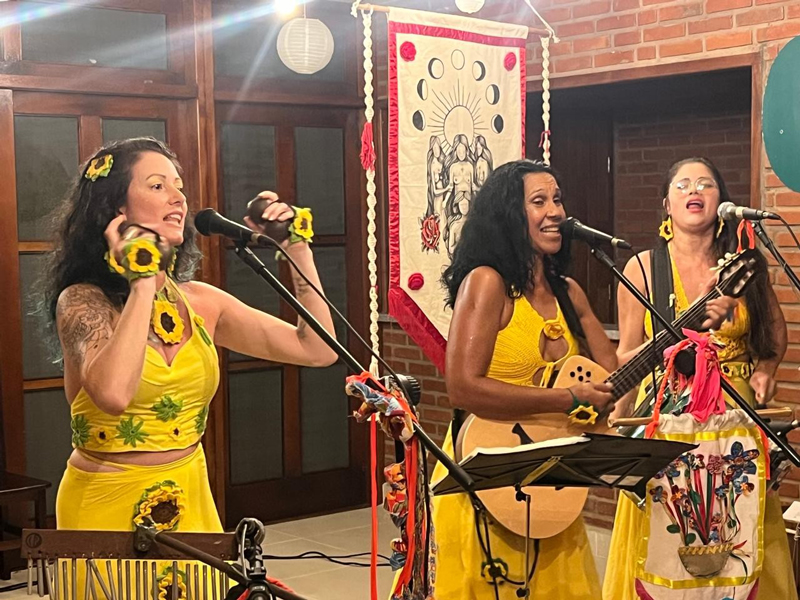
The caiçara fandango of the Marujá region, on the southern coast of São Paulo, represents one of the most spirited expressions of Brazil’s traditional coastal culture. More than a musical genre or dance practice, fandango embodies a complex social and cultural system that intertwines music, collective labor, spirituality, craftsmanship, and community memory. Firmly established in the traditional caiçara way of life — historically linked to artisanal fishing, small-scale agriculture, canoe building, and mangrove use — the fandango survives as a living testimony of the intimate relationship between local communities and the Atlantic Forest coastal landscape.
The communities surrounding Marujá, located near the Tumba Island Reserve and the Cardoso Island State Park, maintain cultural traditions that are deeply connected to the ecological dynamics of the Lagamar estuarine complex. The management plan of the reserve itself recognizes caiçara culture as one of the region’s essential sociocultural attributes, highlighting traditional fishing fences, artisanal practices, and community-based uses of natural resources as part of the territory’s heritage.
In 2012, the caiçara fandango was officially recognized by the Instituto do Patrimônio Histórico e Artístico Nacional (National Institute of Historic and Artistic Heritage), also known as IPHAN, as part of Brazil’s Intangible Cultural Heritage. This recognition emphasized that fandango is not merely a folkloric performance, but rather a repository of ancestral knowledge transmitted orally across generations. Its universe includes handmade instruments such as rabecas and violas, poetic singing traditions, rhythmic footwork, communal celebrations, and rituals associated with fishing cycles, religious festivities, and collective work gatherings known as puxirões. In the Marujá region, fandango historically accompanied celebrations after fishing seasons and community efforts, reinforcing social cohesion and cultural continuity.
The cultural significance of this territory is further amplified by its environmental and historical importance. According to the reserve’s management plan, the broader Jacupiranga region was protected by the CONDEPHAAT (Brazilian Heritage Council) and later recognized by UNESCO as part of the Atlantic Forest Biosphere Reserve and a Natural World Heritage Site. Within this context, fandango emerges not only as an artistic manifestation, but also as a cultural expression intrinsically linked to biodiversity conservation and territorial permanence. The continuity of caiçara culture depends directly on the preservation of traditional livelihoods, ecological knowledge, and sustainable interactions with mangroves, forests, estuaries, and coastal waters.
Contemporary cultural groups have played an important role in renewing and strengthening this heritage. Among them, Meninas do Sol stands out as a female-led caiçara musical collective from the Cananeia region. Their work bridges tradition and contemporary cultural expression, incorporating elements of fandango, coastal rhythms, oral histories, and the everyday life of fishing communities. The group also highlights the role of women in caiçara cultural transmission, an aspect often overlooked in traditional narratives centered on male musicians and fishermen.
By performing in festivals, cultural gatherings, and socio-environmental events, Meninas do Sol contributes to the safeguarding of intangible heritage while promoting cultural identity and environmental awareness. Their music reinforces the connection between territory, memory, and community resilience, helping younger generations recognize the value of caiçara traditions in a rapidly changing coastal world. In this sense, the group represents not only a musical ensemble, but also a contemporary expression of cultural resistance and ecological belonging.
Together, the fandango tradition and the work of groups such as Meninas do Sol reveal how cultural heritage and environmental conservation are inseparable in the Lagamar region. The preservation of the Atlantic Forest coastline is deeply tied to the survival of the communities that have historically shaped and protected these landscapes through sustainable practices, collective memory, and artistic expression.
Discography:
Meninas do Sol, EP (2024)
More at:
— Instagram: https://www.instagram.com/meninasdo_sol/
— Facebook: https://www.facebook.com/profile.php?id=61559934119127

Author: Oswaldo Lucon
