
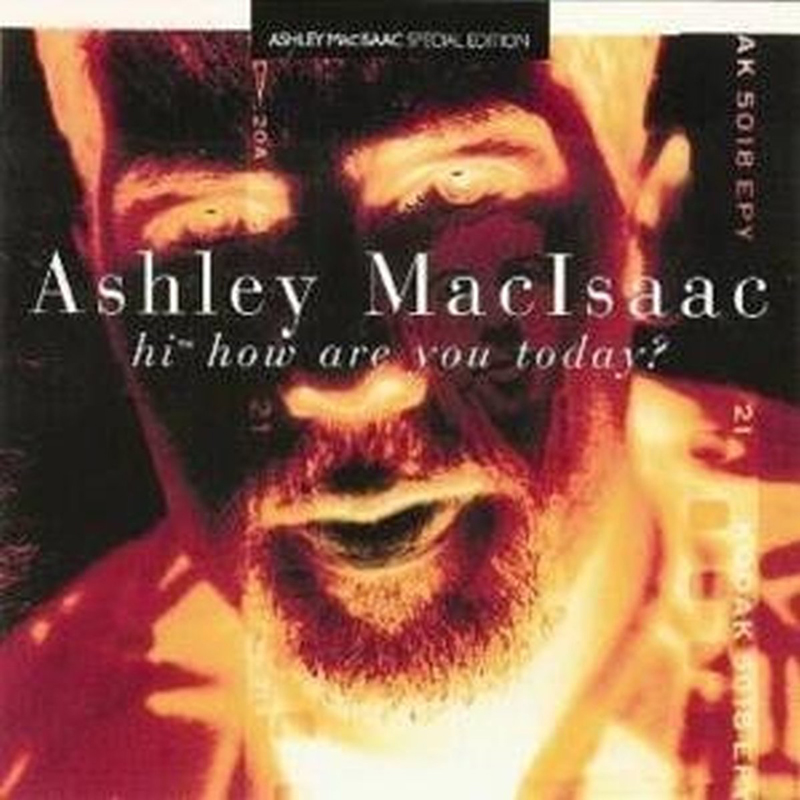
Ashley MacIsaac — Hi, How Are You Today? (A&M Records, 1995)
Ashley MacIsaac’s now classic 1995 release Hi, How Are You Today? mixed the joyful Cape Breton fiddle tradition with contemporary dance beats that helped push East Coast Canadian music onto wider international recognition.
The album shifted between irresistible club-ready energy and traditional roots repertoire. The hit single “Sleepy Maggie” leaned into dance-forward arrangements, with the terrific Mary Jane Lamond adding Gaelic vocals.
“Rusty D-Con-Struck-Tion” brought a rock edge to jig-driven material, while “What an Idiot He Is” featured the all-female group Jale and became MacIsaac’s recorded singing debut, delivered with self-mocking humor.
Traditional selections remained fundamental. Tracks such as “The Devil in the Kitchen,” “Spoonboy,” and “MacDougall’s Pride” underscored his commitment to the Cape Breton traditions. MacIsaac said his basic approach to the fiddle stayed consistent even if arrangements changed.
He described developing those arrangements during winter recording sessions ahead of the album’s Canadian release in November 1995, sketching parts with specific stylistic references in mind. The sessions drew on a varied roster of top players, including his backing band the Kitchen Devils, Big Sugar guitarist Gordie Johnson, jazz drummer Graeme Kirkland, and Quartetto Gelato.
A hidden final track, “Kill Your Foes,” closed the record on a memorial note. MacIsaac performed an air by Buddy MacMaster in tribute to those lost to AIDS.
Hi, How Are You Today? was released after MacIsaac’s more traditional earlier album Close to the Floor (1992), which featured Joy Beaton on piano and David MacIsaac on guitar. Criticism from some traditionalists has followed MacIsaac for departing from older Highland fiddle expectations. MacIsaac demonstrated that he could still make traditional music easily by releasing the all-traditional Fine, Thank You Very Much, a follow-up to the earlier album’s question.
MacIsaac’s “bad boy” public image, kilted, stylized, and confrontational, matched the record’s willingness to meet head-on diverse genres.

Author: Ryan Emmert
