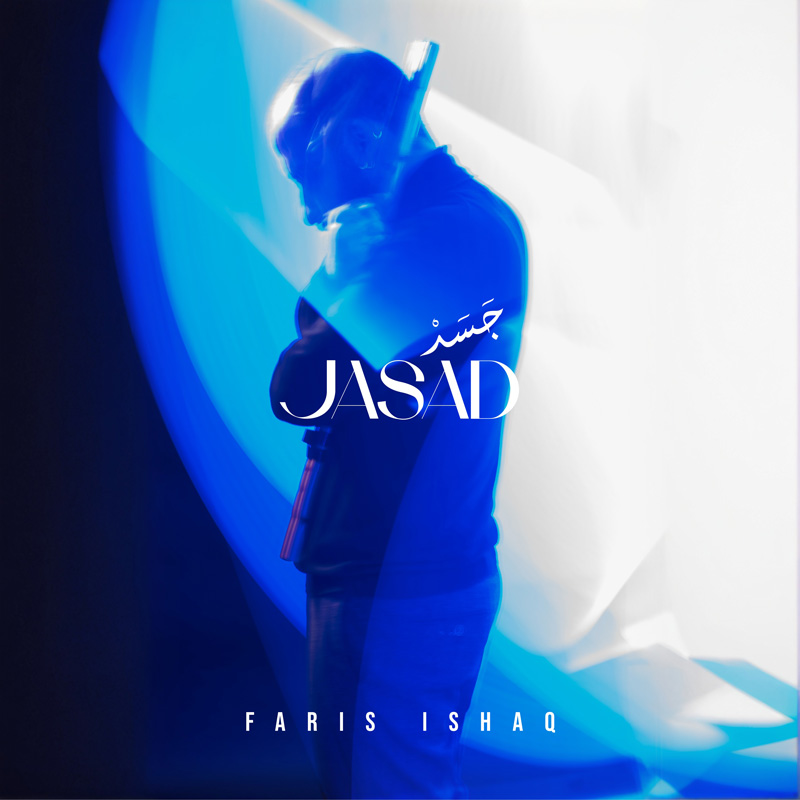
Faris Ishaq – JASAD (self-release, 2026)
Bethlehem-born Palestinian ney (or nay) player and percussionist Faris Ishaq uses breath, rhythm, and Arabic musical tradition on JASAD جَسَد, his 2026 solo album. The title means “Body” in Arabic, a reference to the physical relationship between performer and instrument that shapes the seven-track release.
Ishaq produced, recorded, mixed and mastered JASAD live at his studio in Bethlehem in the West Bank. The sessions feature no overdubs. His sole instruments are the nay flute and a leg-mounted frame drum, with foot percussion also part of his performance setup.
Made from reed cane, without a mouthpiece or mechanical keys, the nay relies on breath control for pitch, tone, and articulation. The instrument has a long history in Arabic music, and Ishaq uses its acoustic properties as the foundation for a lovel, imaginative and fearlessly original album that weaves Palestinian and Levantine traditions with jazz language and new instrumental techniques.

“The sounds of the nay are for me a place for healing and contemplation,” Ishaq says. “On JASAD, I wanted to rekindle the quiet dialogue between breath, body, and our surrounding living landscape in an increasingly digitized world.”
The album opens with “Ard,” Arabic for “Earth” or “Land.” Here, Ishaq brings together traditional Arabic songs associated with Palestine, Jordan, and Iraq. His past as a Dabke dancer also affects the track’s frame-drum rhythms, while the nay reflects Tashbib, a traditional improvisational woodwind practice used by shepherd musicians.
Four original compositions, “Incense Trail,” “Carved,” “Sukon” and “Twilight”, form the album’s central body of new material. “Incense Trail” takes its initial idea from the Arabic word Qabas, which refers to a small source of light or spark. Ishaq developed a specific nay technique for the piece, with acoustic effects that lead into a more lyrical melodic section.
“Carved,” meanwhile, takes inspiration from the construction of the reed flute itself. Ishaq uses natural overtones, multiphonics, and Arabic jazz phrasing as part of the composition. “Sukon,” whose title means “stillness,” reduces the music to sparse melodies and acoustics. On “Twilight,” he turns to the Nakreez maqam and its darker intervallic character to evoke the shift between daylight and night.
The album also includes “Fragments,” a prelude to Richard Rodgers and Oscar Hammerstein II’s “My Favorite Things,” followed by Ishaq’s full interpretation of the song. His arrangement connects Arabic maqam practice with the modal jazz language closely associated with John Coltrane’s version of the composition.
“I move between rich Arabic Maqam modalities and fierce, Coltrane-inspired arrangements,” Ishaq says. “My aim was to ignite an evolving dialogue between Tashbib and global jazz sensibilities. By weaving cultural memory with contemporary expression, JASAD celebrates the nay as a living artifact—rooted, evolving, and present.”

Ishaq studied at Berklee College of Music’s Global Jazz program, where his work focused in part on connections between Arabic tetrachords and jazz improvisation. His previous releases include Tripolarity (2019), Nature Addresses You (2021) and Kham (2023). He also released “Supplication” with bassist John Patitucci and contributed to the BAFTA-nominated Assassin’s Creed Mirage soundtrack. His work also includes A Wildscape, a concerto for nay and orchestra.
JASAD received support from the Arab Fund for Arts & Culture and the PRS Foundation Open Fund for Music Creators. Ishaq independently released the album digitally on July 17, 2026, with live dates set to include a WOMEX showcase.
Tracklist
- “Ard” — arrangement of traditional Arabic songs
- “Incense Trail” — original composition
- “Carved” — original composition
- “Fragments” — arrangement/prelude to “My Favorite Things”
- “My Favorite Things” — Richard Rodgers and Oscar Hammerstein II
- “Sukon” — original composition
- “Twilight” — original composition
Faris Ishaq JASAD Photo by Fadi Dahabreh. Design by Hind Hilal.
Buy JASAD.

Author: Madison Quinn
