
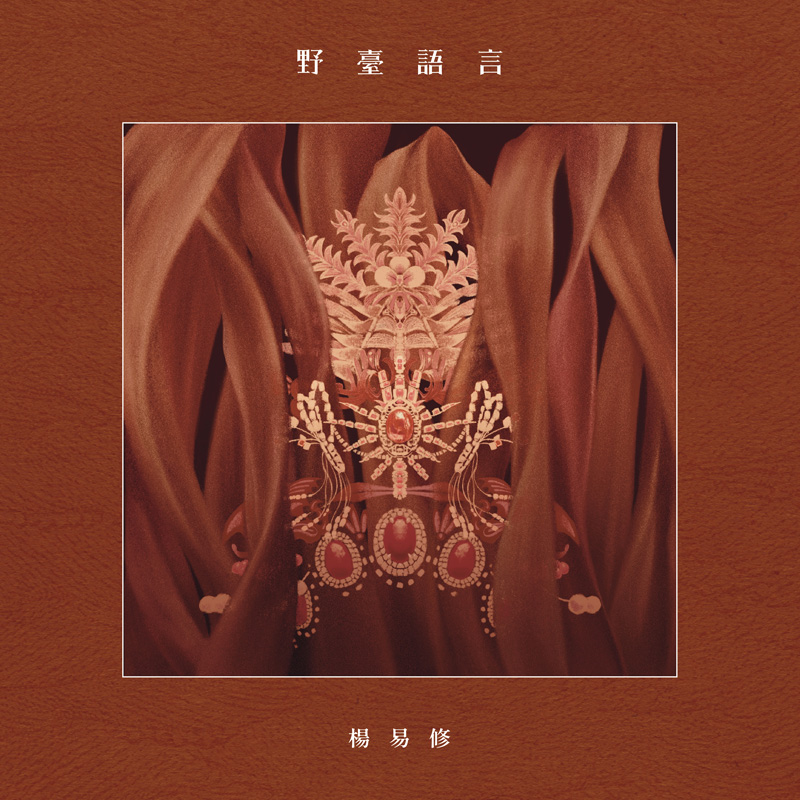
Sherwin Yang (楊易修) — New Panorama of Taiwanese Opera 野臺語言》(self-release, 2026)
Sherwin Yang’s New Panorama of Taiwanese Opera 野臺語言》 presents a contemporary interpretation of Taiwanese opera by incorporating a flavorful mix of jazz, pop, folk traditions, and world music elements.
The album features six iftd female vocalists extracted from pop and jazz backgrounds. The all-female lineup reflects the early history of Taiwanese opera, when women performed every role. Throughout the project, the singers reinterpret traditional melodies. Notably, the compositions illustrate disillusionment, intimacy, fatigue, grief, and acceptance.
“Tune of Disillusion” opens with the atmosphere of a traditional theater before a fusion jazz big band enters. The piece conveys displacement and social frustration. “Satire of Disguise” then combines colonial-era popular melodies with joyful Brazilian and Arabic percussion as the song discusses friendship and social hypocrisy.
“Verse of Vow” offers a quieter contrast. A traditional yueqin and guitar support a tranquil love song with open harmonies. Next, the instrumental “Cadence of Formosa” joins theatrical transition music with several approaches to improvisation.
“Aside of Fatigue” combines Irish rhythms with traditional spoken-sung narration to portray the pressure of working life. “Dirge of Return” connects Taiwanese weeping melodies with Buddhist verses in a measured farewell. The closing track, “Elegy of Enigma,” gradually strips away the vocal lines until the piece reaches an unresolved silence.
Musicians: Chou, I-Wen on vocals and backing vocals; Ke, Ming-Feng on spoken vocals and Taiwanese opera fiddles; Lee, Tzu-Ying on yueqin and sanxian; Sherwin Yang on electric guitar, piano, yueqin, gopichand, kkwaenggwari, Balinese gamelan, vocals, and backing vocals; Jiro Yeh on double bass, electric bass, and cello; Chen, Wen-Wei on drums; Poyu Hsu on Taiwanese opera metal percussion; Hsu, Chao-Tzu on vocals and backing vocals; Huang, Si-Xuan on Taiwanese opera backing vocals; Huang, Po-Yu on ah-bó-ta̍t-á, suona, and guanzi; Victor Low on oud; Sayun Chang on dumbek, riq, tar, timbales, tatuk, dunun, floor tom hoop, djembe, computer keyboard and mouse, and percussion; aDAN on vocals and backing vocals; Ray Huang on acoustic guitar; Liu, Shih-Yu on bangdi and qudi; Chen, Chung-Ching on liuqin, ruan, yueqin, sanxian, and Chinese lutes; Lin, Liang-Yu on Rhodes and organ; Dee Chen on drums; Yoyi You on vocals, backing vocals, and spoken vocals; Tseng, Po-Hao on spoken vocals; Ann Lin on fiddle; Patricio Penin on uilleann pipes and tin whistle; Jing Wu on vocals and backing vocals; YuYing Hsu on piano and Rhodes; Wang, I-Wen on đàn bầu; Yu, Pei-Jen on vocals and backing vocals; Tawei Huang on morin khuur.
Buy New Panorama of Taiwanese Opera 野臺語言》.

Author: Madison Quinn
