Dänkki Briha – Merjamaa (Panama-levyt and Sick Boogie Recordings, 2026)
Merjamaa is the latest from Finnish folktronica trio Dänkki Briha. The South Karelian group combines hooky experimental electronics with Finnish, Karelian, and Vepsian folk traditions. They use archival poetry and traditional song lyrics that appear alongside newly written verses.
The title refers to the historical homeland of the Merya, a Finno-Ugric people who lived in the northern Volga region. The population gradually assimilated into surrounding Slavic communities from the 10th century onward.
Singer and lyricist Juho Liira extracted much of the text from folk songs, ancient poetic sources, and the Kanteletar, a collection of lyrical poetry associated with the Kalevala. However, the trio rearranged and adapted the source material.
“The Kalevala is a literary work a little over 150 years old, a monstrous composition—perhaps aesthetically quite fine and Homeric—but in the Kanteletar, those elements exist as smaller fragments,” Liira said. “There, those beautiful poetic themes stand as poems in their own right.”
Nature plays a central role throughout the record. The lyrics reflect older traditions in which forests, water, weather, and deities formed part of everyday spiritual life. For example, the closing track, “Annikki, Turusen neiti,” calls upon Ukko Ylinen and Väinämöinen to summon rain and rising water.
Previous singles introduced several sides of the album. “Puolan Marja” draws from Finnish-Karelian folk verses, while “Kodiman poig” uses a poem by Vepsian writer Nikolai Abramov. Meanwhile, “Hopea & kulta” adapts a Kanteletar love poem into an electronic folk song. Tuukka Kovasiipi directed its accompanying music video.
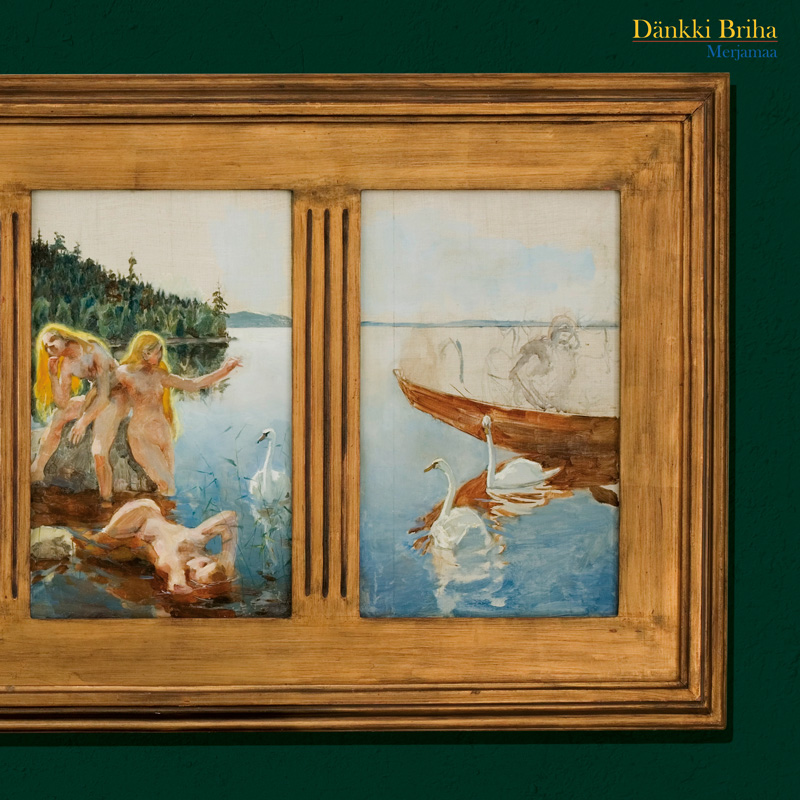
The album artwork continues the historical theme. Its cover features Akseli Gallen-Kallela’s unfinished 1886 painting Väinämöisen soitto (Väinämöinen Playing), which depicts one of the central figures of the Kalevala.

Musicians: Juho Liira on vocals; Manu Penttilä, sound design; Matias Kontula on electric violin.
Dänkki Briha is a trio that straddles the line between ethno-electronica and folktronica, combining experimental production, interpretations of folk traditions, and theatrical expression. The trio’s debut album, Viipurin Kingpin, was released in 2024

Author: JGurski
